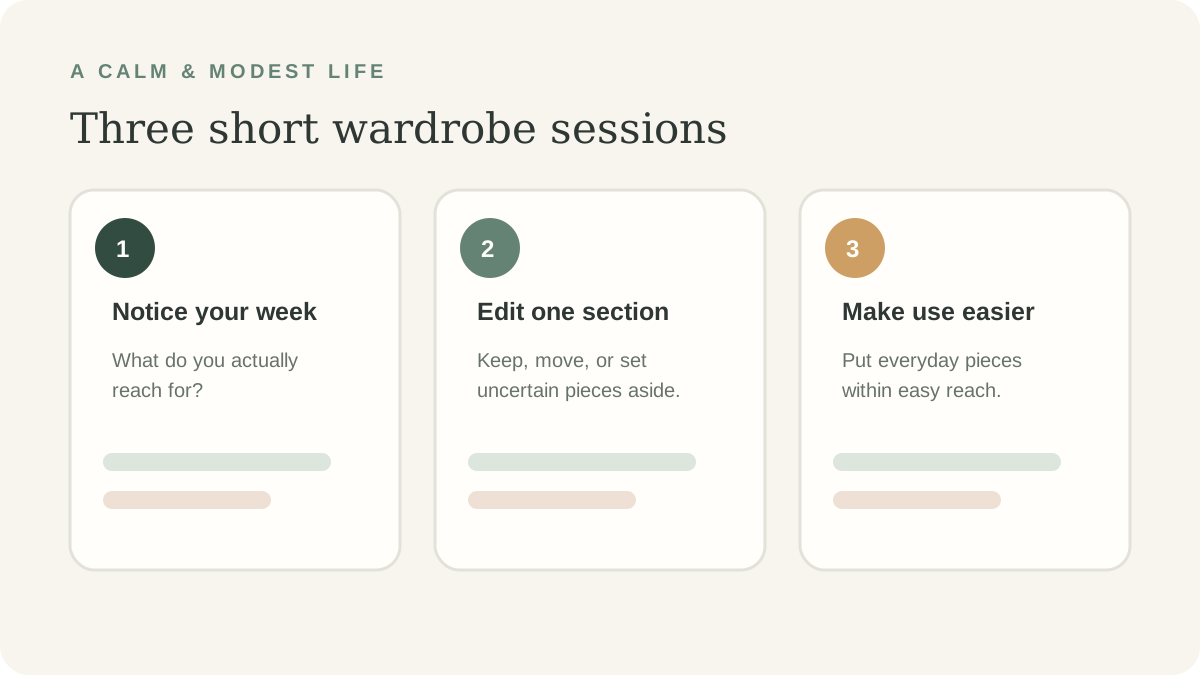
You can make a wardrobe easier to use without getting rid of half of it: edit one section at a time, keep daily pieces within reach, and set uncertain items aside for later.
Try three short sessions instead of emptying the whole closet at once. Fifteen or twenty minutes is enough for each; stop sooner if you’ve had enough.
Session one: start with your actual week
Write down three situations you dress for this week and one outfit that already works for each. Include any uniform, care work, sensory preference, weather need, or laundry constraint that matters to you. The point is to see what your clothes must do before deciding what to change.
Before moving anything, think about the clothes you reach for during an ordinary week. What do you wear to work, errands, home, or events you attend regularly? Which items are hard to find? Which outfit combinations do you already know work for you?
Write down one or two friction points. Maybe the clothes you wear most are at the back. Maybe clean laundry has no easy place to go. Maybe you have several items for a life you rarely lead, while the everyday pieces are hard to spot.
This is about how your wardrobe serves you now. Your body, schedule, comfort, and preferences are allowed to change.
Session two: sort only one useful section
Choose a drawer, a rail, or one category you use often. Take out only what fits into the time you have. Make simple groups: wear regularly, needs repair or washing, and unsure.
For the “unsure” pieces, you do not need to make a decision on the spot. Put them together and revisit them later, or keep them where they are if that feels easier. You can also skip trying anything on. The goal is to notice what makes daily dressing easier, not to judge how your body or clothes should look.
Session three: put the everyday pieces within reach
Return the clothes you wear most often to the easiest places to reach. Grouping by type, workday, or outfit can help if it matches the way you get dressed. If a system makes more steps, use a simpler one.
Notice whether something genuinely needs mending or washing. Set aside only the repairs you’re ready to handle, and choose a realistic next step for them. You don’t have to turn this into a backlog of chores.
Pause before filling a gap
If you notice a missing item, write down what it is and when you need it. Give yourself a little time to check whether another item already works. If it still seems useful, decide based on your needs and budget. Our gentle weekly reset for spending less offers a simple way to pause on optional purchases without delaying essentials.
A wardrobe edit is finished when getting dressed feels a little more workable. Keep the parts that helped, leave the rest for another day, and don’t measure progress by how many items leave your closet.
TRY SOMETHING SMALL TODAY
Want one small next step?
Our free seven-day checklist has one short home action for each day. Download it if that would help; the guide works on its own.
Download the free checklist ↓